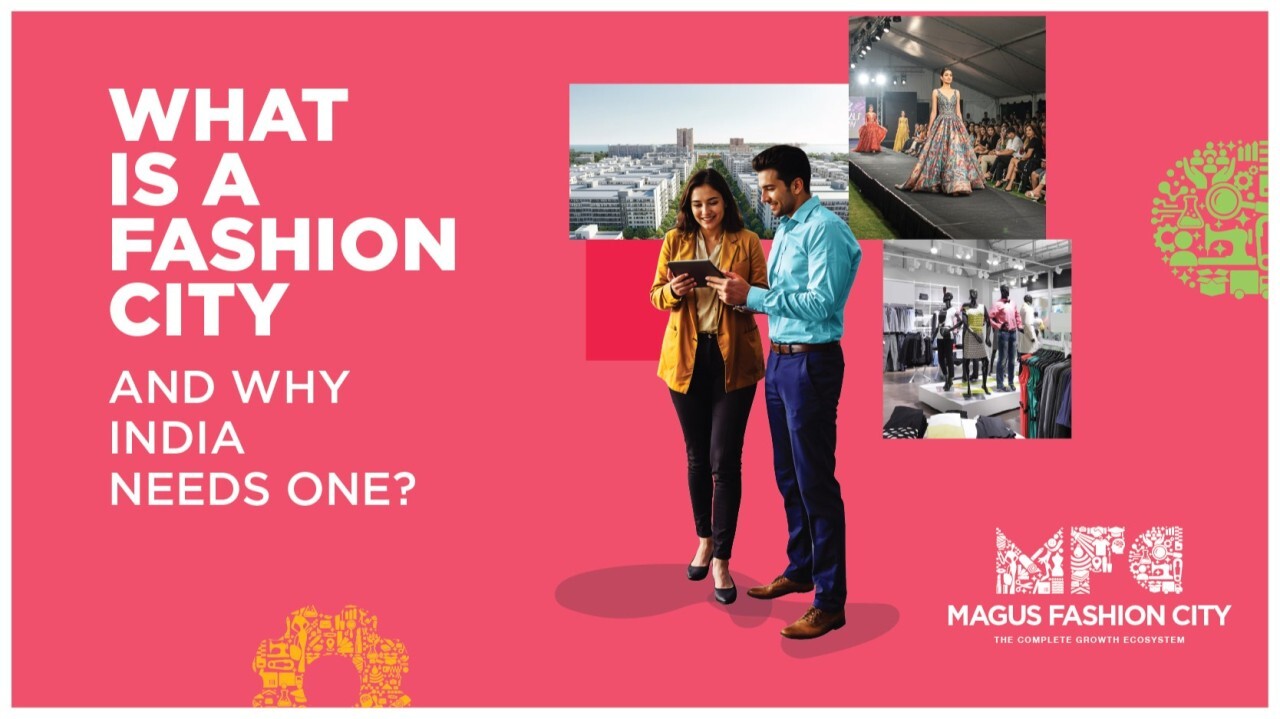
India is one of the largest producers of textiles and garments in the world. From cotton fields to couture runways, the country has always had the raw strength of a fashion powerhouse.
Yet, there’s a missing link.
Despite having talent, manufacturing capacity, and a massive domestic market, India still lacks something critical — a unified ecosystem.
This is where the concept of a Fashion City comes in.
What is a Fashion City?
A Fashion City is not just a cluster of factories or a marketplace. It is a fully integrated ecosystem designed for the fashion industry.
Think of it as a city built by the fashion industry, for the fashion industry.
It brings together:
- Textile manufacturers
- Garment producers
- Accessory suppliers
- Designers & creative studios
- Warehousing & logistics
- Wholesale & B2B marketplaces
- Retail & export channels
- Skill development & incubation centers
All of this, in one planned, connected space.
Globally, fashion hubs like Milan, Paris, and New York thrive because their ecosystems are tightly integrated.
India, despite its scale, largely operates in silos.
The Problem with India’s Current Fashion Ecosystem
Today, the Indian fashion and textile industry is highly fragmented.
A typical journey looks like this:
- Fabric sourced from one city
- Manufacturing done in another
- Accessories from a third location
- Finishing, packaging, and logistics somewhere else
Cities like Bhiwandi, Surat, and Tiruppur specialize in parts of the value chain — but rarely work in a synchronized, integrated manner.
This leads to:
- Higher operational costs
- Delays in production
- Quality inconsistencies
- Limited scalability for small businesses
- Missed global opportunities
In short, India has the pieces — but not the platform.
Why India Needs a Fashion City
1. To Create a Unified Ecosystem
A Fashion City connects every stakeholder under one roof. This reduces dependency on multiple geographies and creates a seamless value chain.
Result? Faster production, better coordination, and higher efficiency.
2. To Empower MSMEs
India’s fashion industry is driven by small and medium businesses.
A Fashion City gives them:
- Ready infrastructure
- Shared resources
- Better visibility
- Access to buyers
Instead of struggling individually, businesses grow collectively.
3. To Boost Global Competitiveness
Countries that dominate fashion exports operate through organized clusters.
A Fashion City allows India to:
- Compete with global supply chains
- Attract international buyers
- Increase export potential
- Build a “Made in India” brand at scale
4. To Reduce Cost & Increase Profitability
When everything is centralized:
- Logistics costs drop
- Lead time reduces
- Inventory management improves
This directly impacts margins — especially for manufacturers and traders.
5. To Build Innovation & Design Culture
Fashion is not just manufacturing — it’s creativity.
A Fashion City fosters:
- Design studios
- Trend forecasting hubs
- Collaboration spaces
- Incubation for new brands
This is how ecosystems like Paris became global trendsetters — not just producers.
6. To Generate Employment at Scale
From labor to luxury designers, from logistics to marketing — a Fashion City creates multi-layered employment opportunities.
It doesn’t just build businesses. It builds livelihoods.
The Future of Fashion in India
India is at a turning point.
With increasing demand, digital transformation, and global attention on Indian manufacturing, the next step is clear:
➡️ Move from fragmented growth to integrated ecosystems
A Fashion City is not just an infrastructure project. It is a strategic evolution of the industry.
Learn More: